
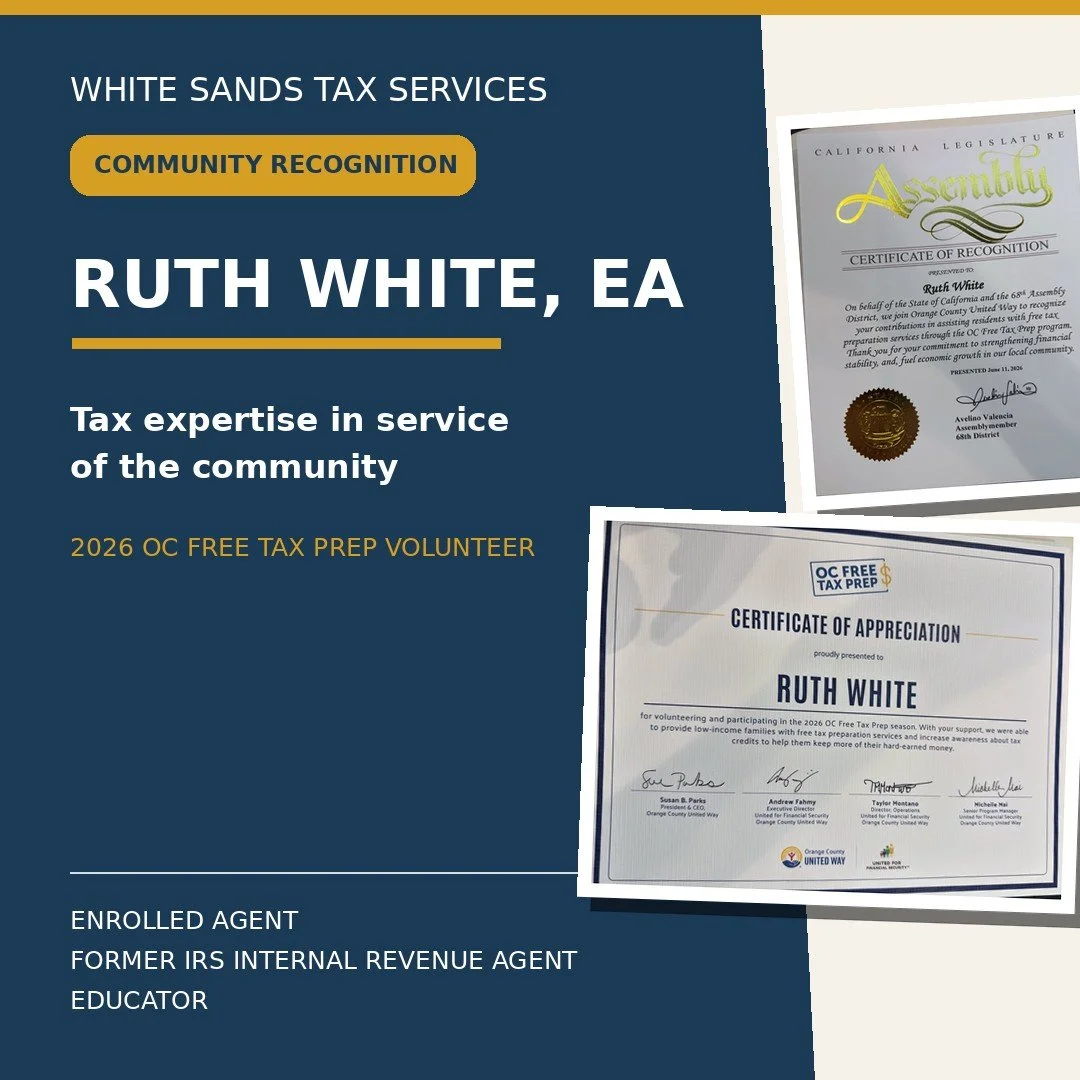
Ruth White, EA, Recognized for Volunteer Tax Service with Orange County United Way
Ruth White, EA, was recognized for her 2026 volunteer service with Orange County United Way’s OC Free Tax Prep program. Learn how her Enrolled Agent credential, former IRS experience, teaching background, and professional memberships shape the thoughtful, audit-aware tax support she provides to individuals and small businesses.
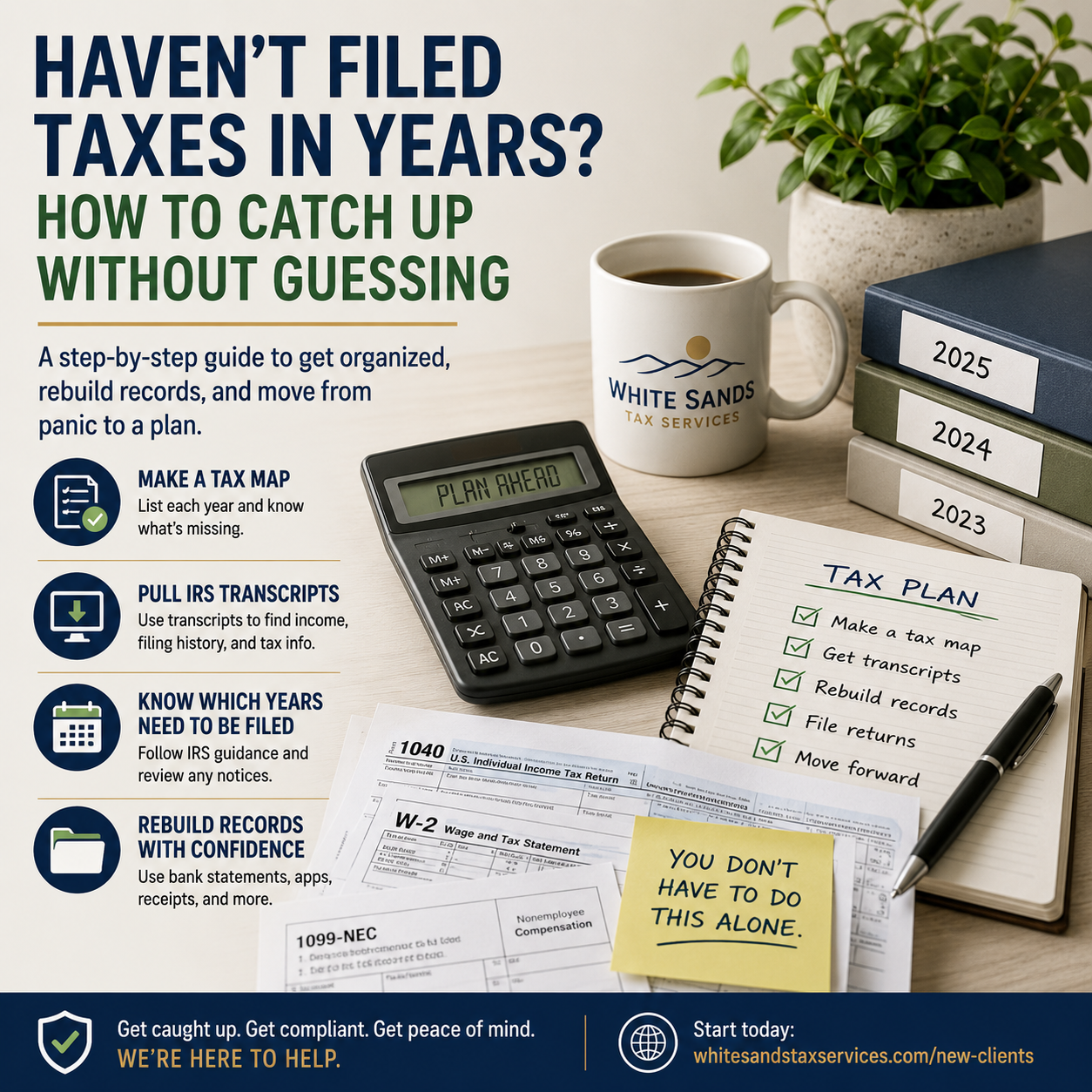
Haven’t Filed Taxes in Years? How to Catch Up Without Guessing
Haven’t filed taxes in years or missing old W-2s, 1099s, or business records? Learn how to get organized, pull IRS transcripts, respond to tax notices, rebuild records, and catch up without guessing.
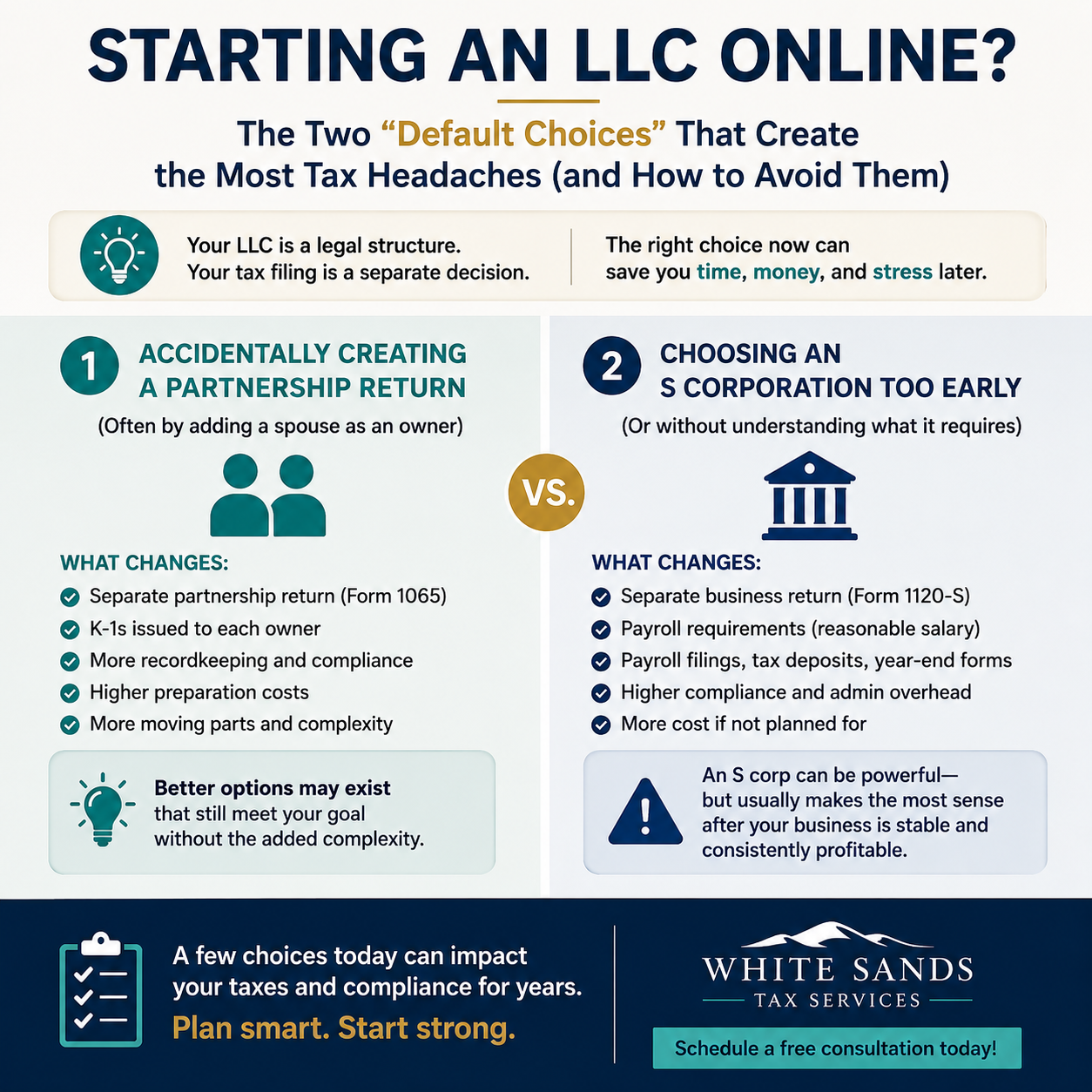
Starting an LLC Online? The Two “Default Choices” That Create the Most Tax Headaches (and How to Avoid Them)
Starting an LLC online can seem simple, but two common choices can create unexpected tax headaches: adding a spouse or co-owner too early, which may trigger a partnership return, and choosing S corporation status before the business is ready for payroll and added compliance. Learn what these decisions mean before you click submit.

White Sands Tax Services Featured in Voyage LA: Sharing Our Story as a Local Tax, Bookkeeping, and Payroll Firm
White Sands Tax Services was recently featured in Voyage LA’s Hidden Gems series. In this post, we share more about the feature, the story behind our firm, and our commitment to making tax preparation, bookkeeping, payroll, and accounting feel more approachable for individuals and small business owners.
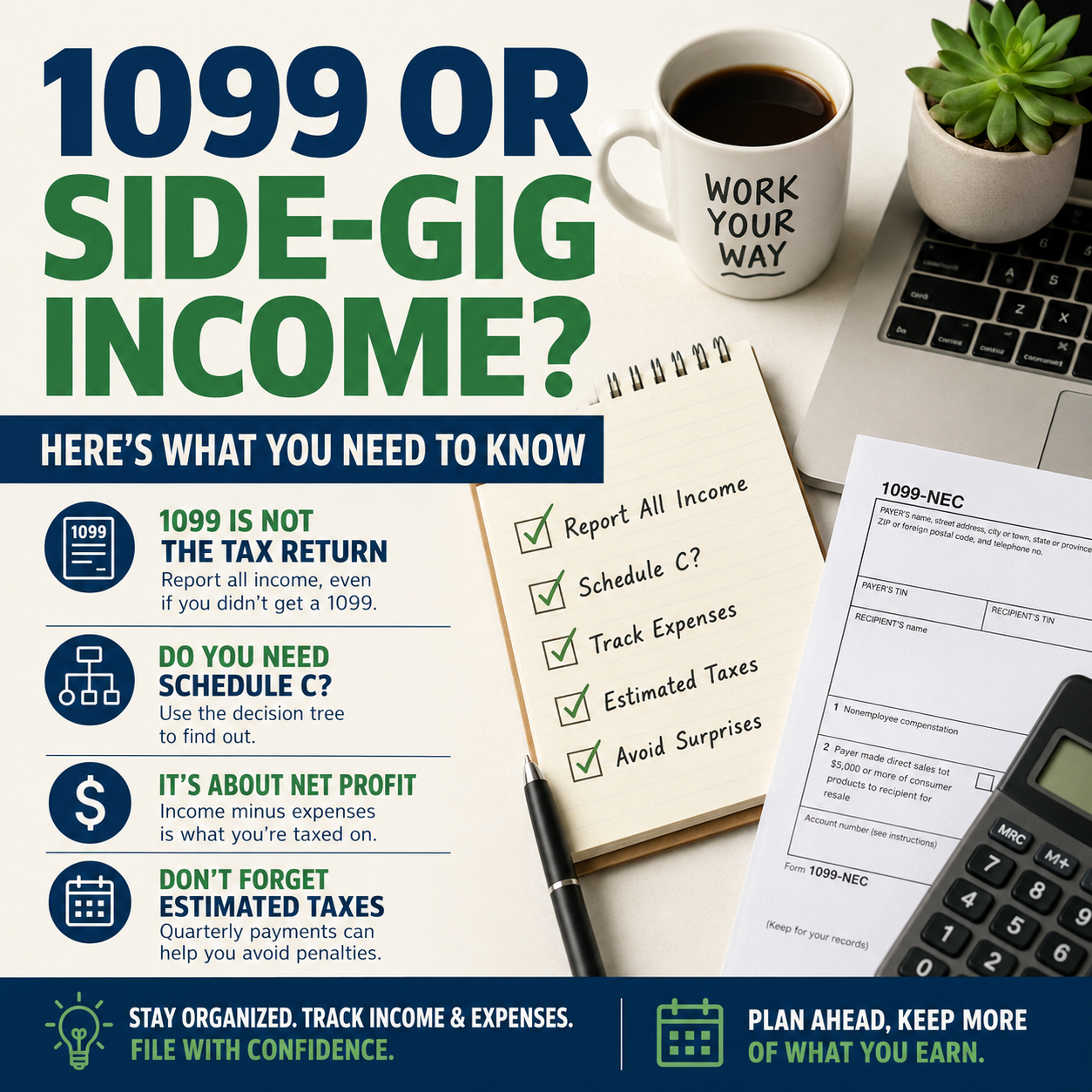
Got a 1099 or Side-Gig Income? How to Report It, When Schedule C Applies, and How to Avoid Estimated Tax Surprises
If you started freelance work, drove for an app, sold online, or earned side-gig income, tax season can get confusing fast. Learn when Schedule C applies, how self-employment taxes work, what to do if you never received a 1099, and practical ways to avoid estimated tax surprises before filing season arrives.

White Sands Tax Services Featured in AOL: Will the New SALT Deduction Actually Make Your Tax Refund Bigger?
White Sands Tax Services was recently featured in AOL discussing the new SALT deduction rules and whether they could lead to a bigger tax refund. In this post, we break down who may benefit, why itemizing matters, and why a larger deduction does not always mean a larger refund.
White Sands Tax Services Featured in The Independent and MSN: When Hiring an Accountant Makes Tax Season Easier
White Sands Tax Services was recently featured in The Independent and MSN in an article about when hiring an accountant can make tax season easier. In this post, we break down why professional tax help can be especially valuable when your return is more complex, your income comes from multiple sources, or you want to avoid costly mistakes and missed opportunities.

Dirty Dozen Tax Scams for 2026: What to Watch For and What to Do If You Get a Suspicious Message
The Internal Revenue Service’s 2026 Dirty Dozen list highlights the tax scams taxpayers should be watching for right now, from phishing texts and AI-powered phone impersonation to ghost preparers and fake credits. In this guide, White Sands Tax Services breaks down what these scams look like in real life, how to respond if you get a suspicious message, and the practical steps you can take to protect your identity and tax information.
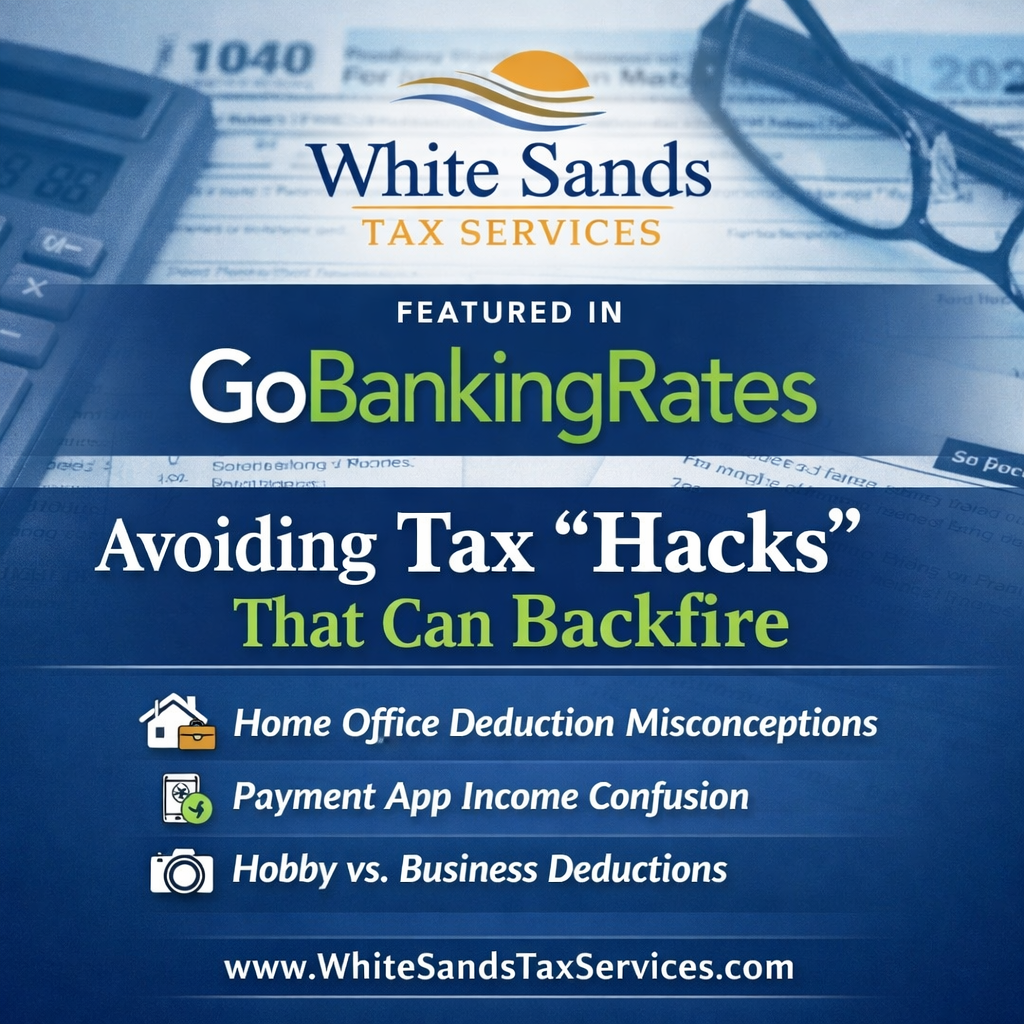
White Sands Tax Services Featured in GoBankingRates: Avoiding Tax “Hacks” That Can Backfire
White Sands Tax Services was recently featured in a GoBankingRates article discussing common tax “hacks” that can actually create problems for taxpayers. In the article, we explain several areas where misunderstandings frequently occur, including home office deductions for employees, payment app income reporting, and hobby versus business deductions.
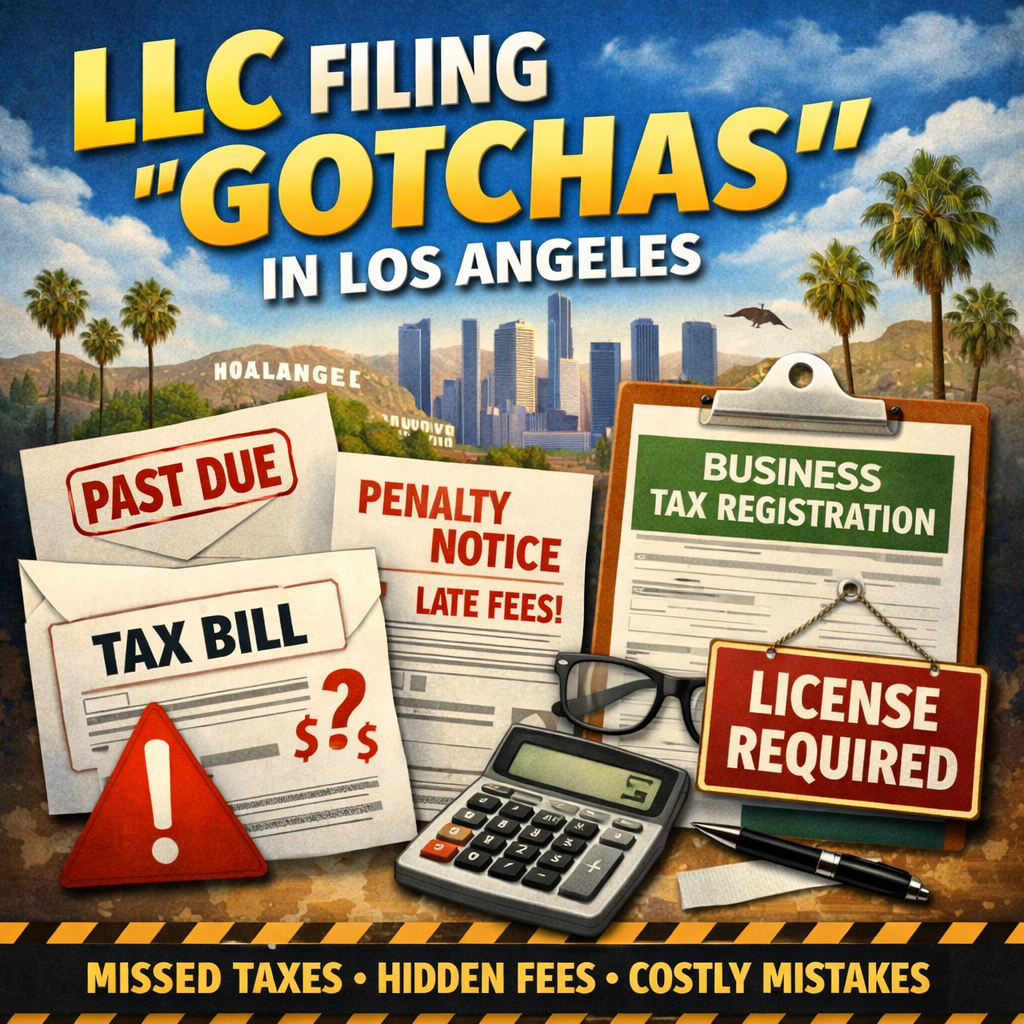
What Online LLC Services Often Miss: Tax and Accounting “Gotchas” That Can Cost You (Especially in Los Angeles)
Online LLC formation services make it easy to file paperwork, but they often miss the tax, accounting, and local compliance steps that prevent costly surprises—especially in Los Angeles. This post walks through the most common “post-LLC” gotchas (like LA business registration and city business tax), California filing and payment requirements, sales tax and payroll setup, and the bookkeeping basics that keep your business clean. Use the included post-LLC audit checklist to spot gaps early and avoid letters, penalties, and preventable fees.

Supporting Kettering Elementary PTA: Tax Guidance on Donations and Sponsorships
We are proud to support the Kettering Elementary PTA as a local sponsor. In this post, we share why community support matters to White Sands Tax Services, plus a quick, practical tax note on how donations and business sponsorships can be treated differently and what documentation to keep.

White Sands Tax Services Featured in New American Funding: Home Improvement Tax Breaks Homeowners Miss
We were recently featured in New American Funding’s homeowner tax guide, and it highlights a point most people miss: many home projects do not create an immediate tax break, but they can still lower taxes later if you document them correctly. Here is our plain-English breakdown of the most common categories, what typically qualifies, and the simple recordkeeping system that can save you the most money.
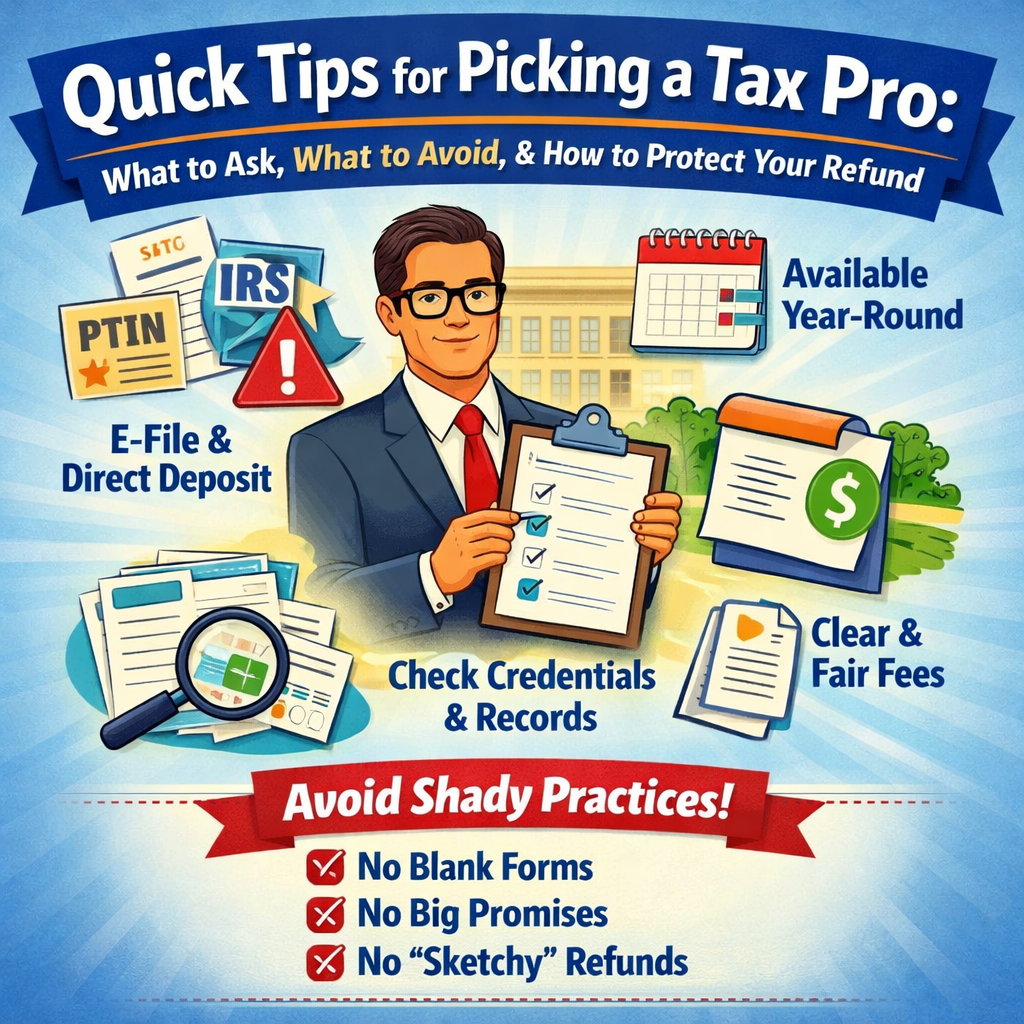
Quick Tips for Picking a Tax Pro: What to Ask, What to Avoid, and How to Protect Your Refund
Before you hand over your W-2s, 1099s, and Social Security number, take five minutes to vet your tax preparer. Learn the two non-negotiables every paid preparer must follow, the seven checks that prevent refund drama, and the warning signs that signal a “quick profit” operation.
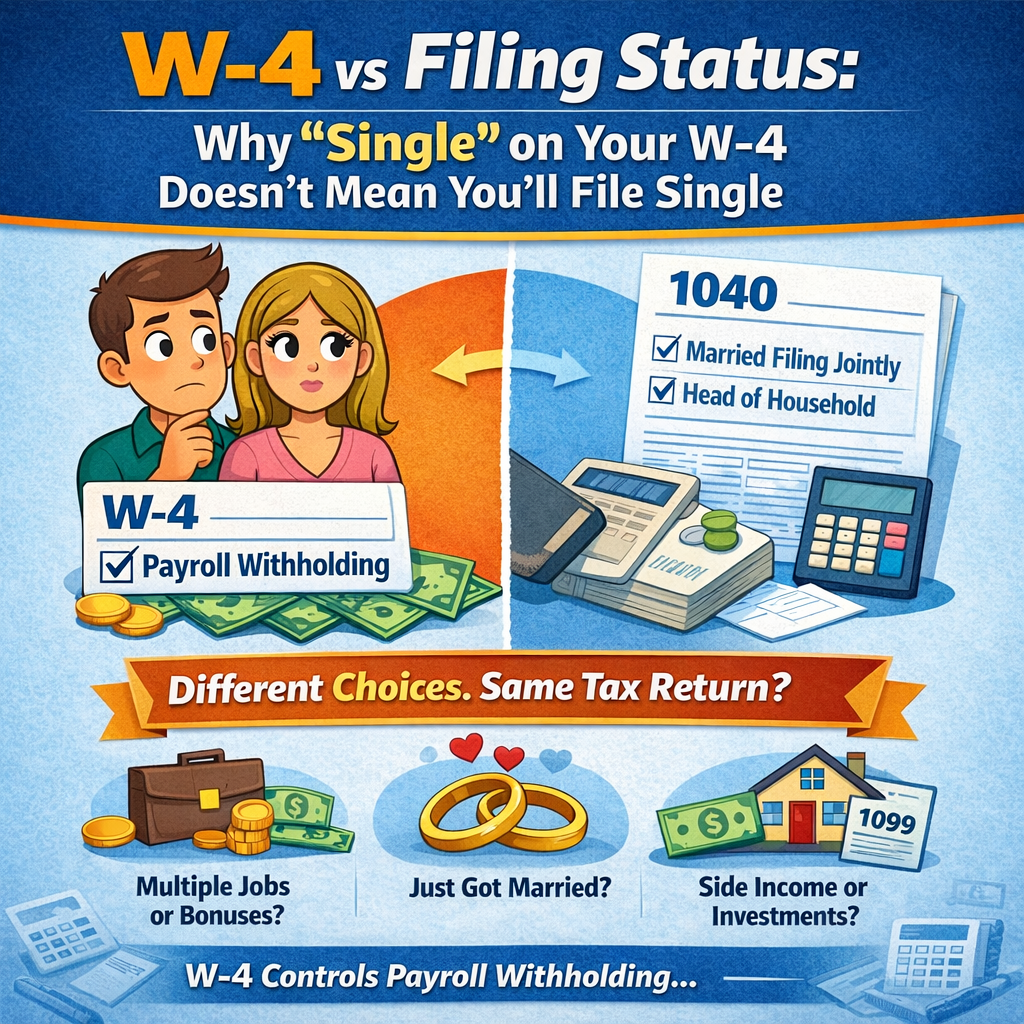
W-4 vs Filing Status: Why “Single” on Your W-4 Doesn’t Mean You’ll File Single
Choosing “Single” on your W-4 doesn’t mean you’ll file your taxes as Single. Your W-4 only controls how much federal tax is withheld from each paycheck, while your filing status is chosen later on your tax return. In this post, we break down why people still end up owing (especially with two incomes, bonuses, job changes, or side income) and share simple, practical ways to adjust your withholding to avoid surprises.
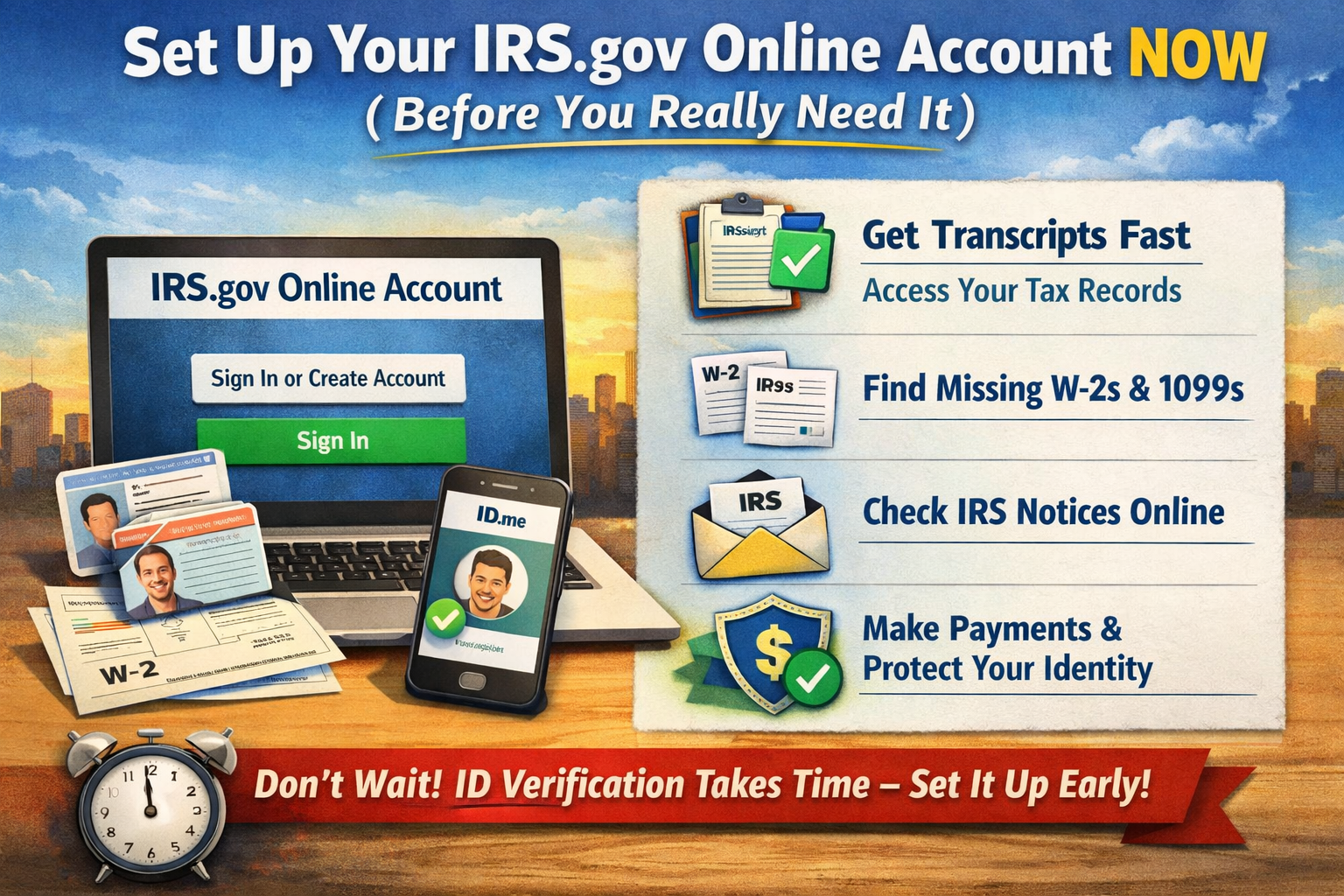
Set Up Your IRS.gov Online Account Now (Before You Really Need It)
Set up your IRS.gov Online Account before you actually need it. When a W-2 is missing, a lender requests transcripts, or an IRS notice shows up, having access already in place can save you days of delays. This guide explains what the IRS Online Account does, how transcripts and digital notices work, why ID.me verification can take longer than expected, and what to have ready so you can get in smoothly.
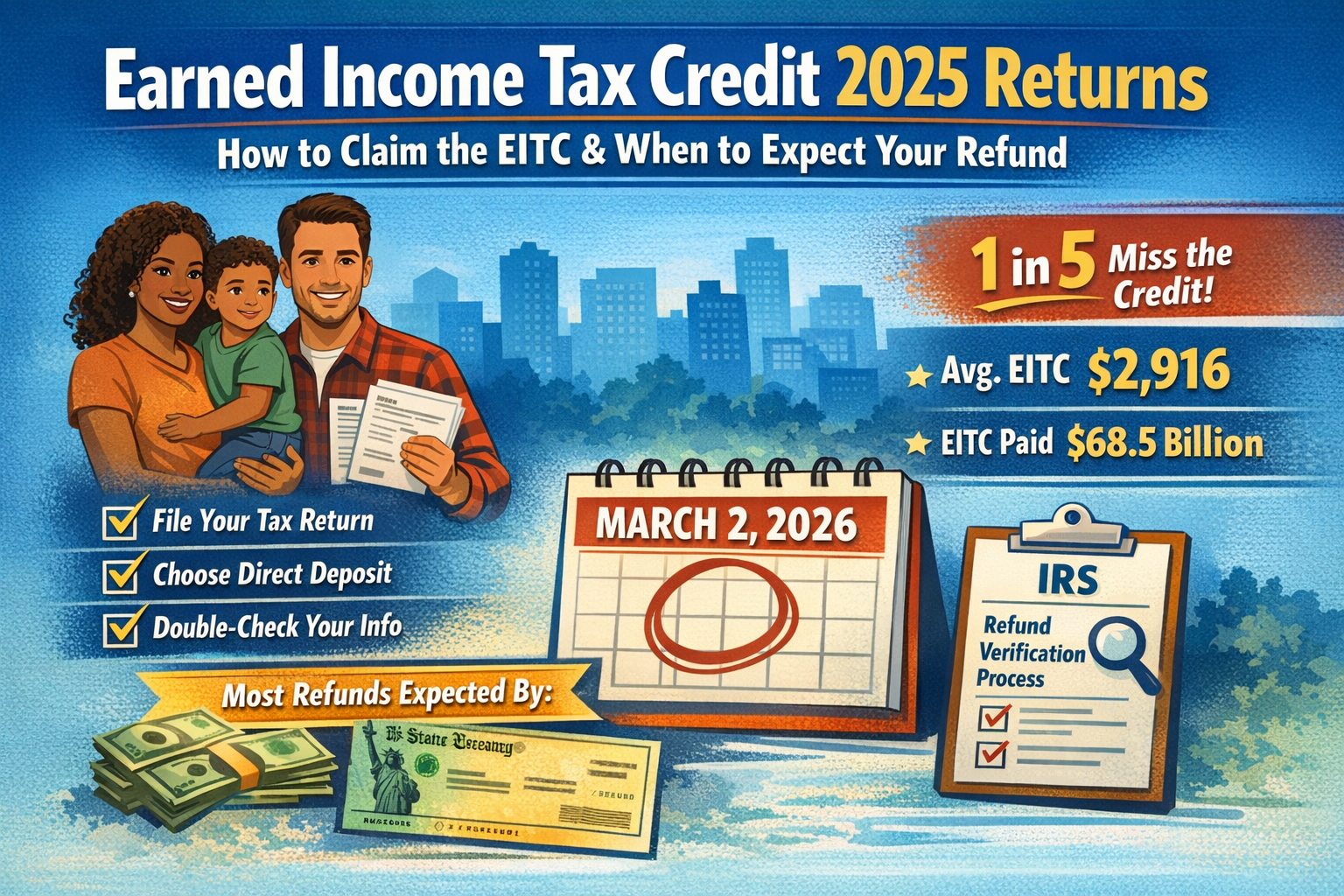
Earned Income Tax Credit for 2025 Returns: How to Claim the EITC and When to Expect Your Refund
Many working families qualify for the Earned Income Tax Credit (EITC) but never claim it, even though it can significantly increase a refund. This article explains, in plain English, what the EITC is, who may be eligible (with or without children), and the practical steps to claim it—like gathering income documents, filing a return even if you’re not required to, and choosing e-file with direct deposit. It also breaks down why EITC refunds are often delayed due to IRS verification rules, and what you can do to reduce avoidable delays caused by common errors. Finally, the post highlights a key timing expectation for many early filers: the IRS projects most EITC refunds will be available by March 2, 2026 (with deposit-date updates showing in Where’s My Refund by Feb. 21, 2026).
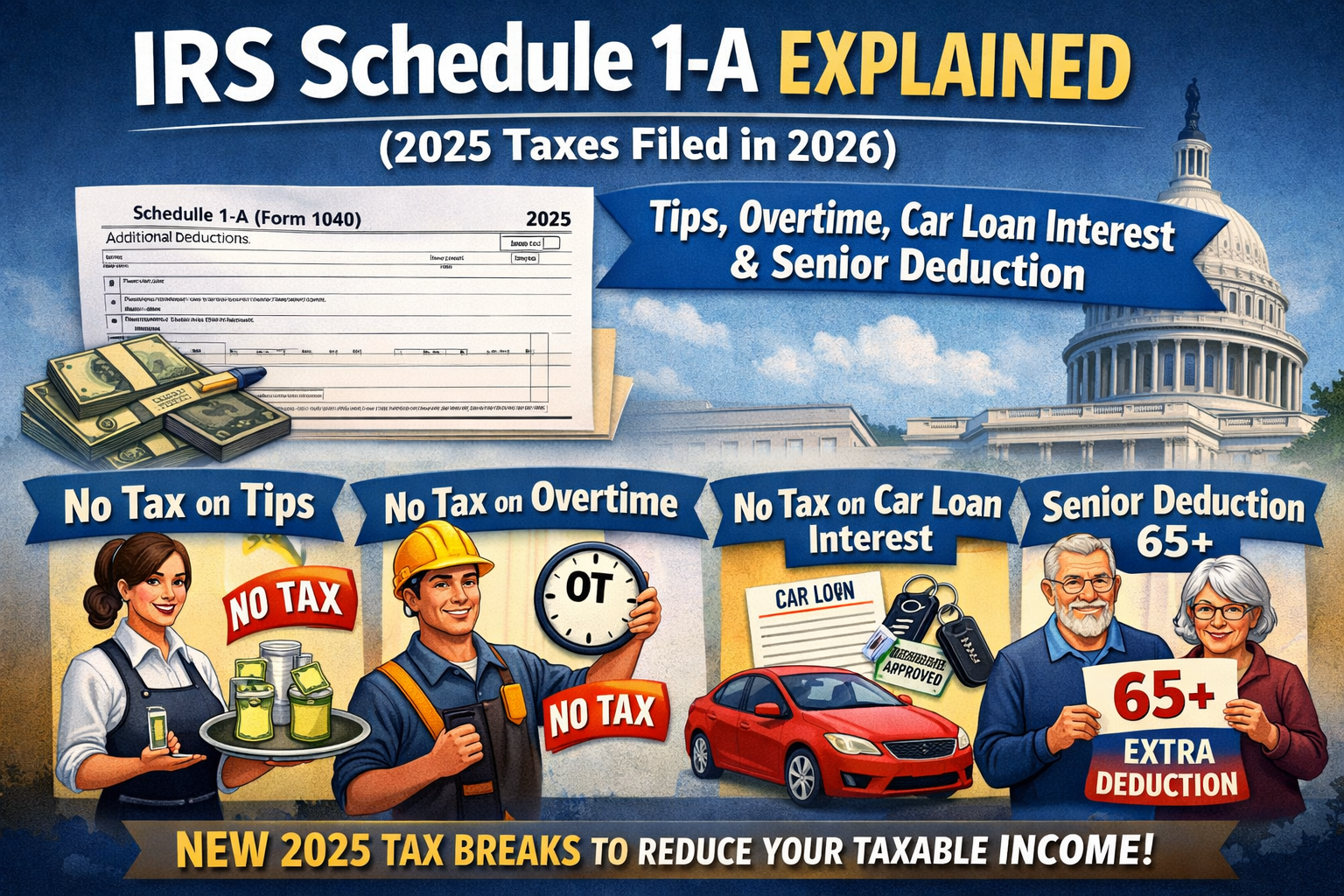
IRS Schedule 1-A Explained (2025 Taxes Filed in 2026): Tips, Overtime, Car Loan Interest, and the Senior Deduction
Schedule 1-A is a brand-new attachment for 2025 federal returns (filed in 2026) that pulls four headline-grabbing tax breaks into one place: tips, overtime, car loan interest, and an enhanced senior deduction. The key thing to know is these benefits generally work as deductions (not “income you don’t report”), and they come with eligibility rules, MAGI phaseouts, and a few easy-to-miss requirements—like separating overtime “premium” pay and reporting a vehicle VIN for the car loan interest deduction. Below is a plain-English guide to what Schedule 1-A does, who qualifies, and what documents to gather now so the deductions are claimed correctly.
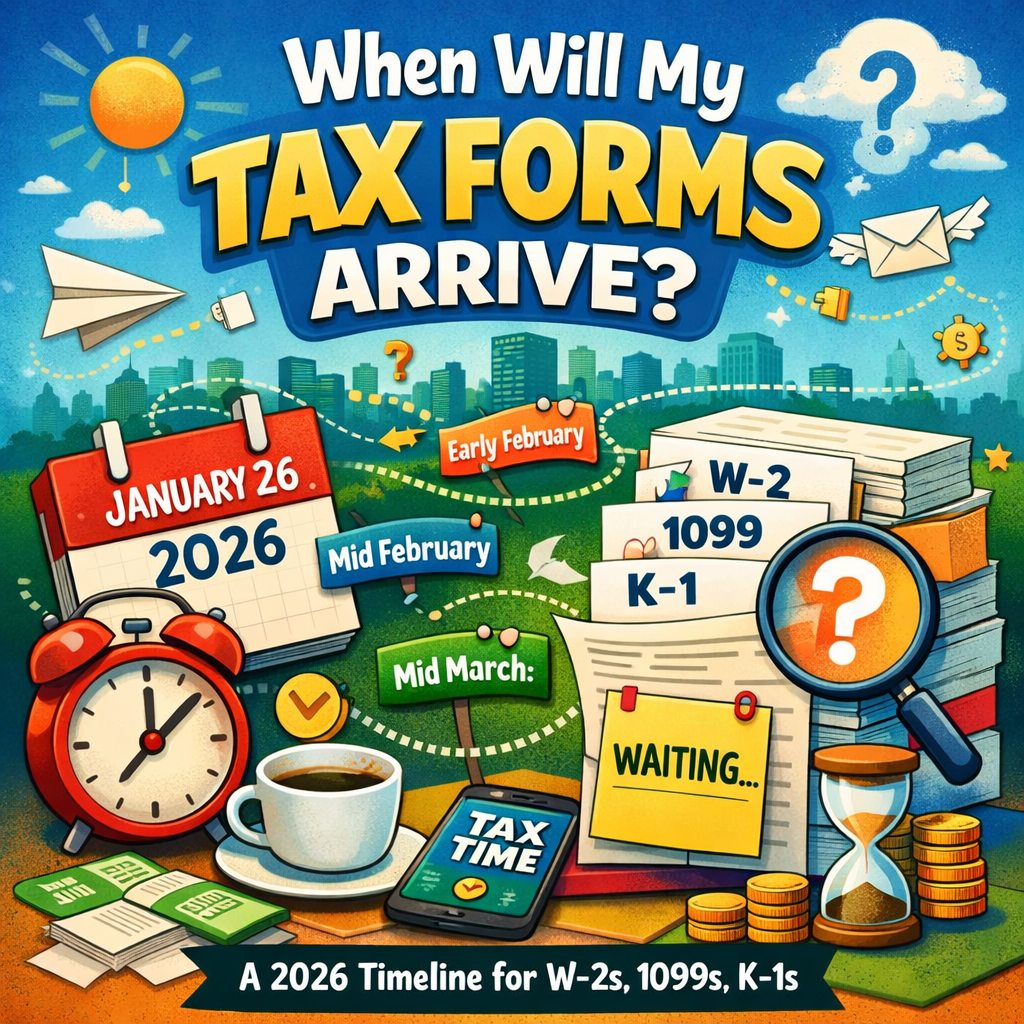
When Will My Tax Forms Arrive? A 2026 Timeline for W-2s, 1099s, K-1s (and What to Do While You Wait)
Waiting on W-2s, 1099s, or a K-1? Use this 2026 timeline to track when tax forms arrive, avoid delays, and file your 2025 return confidently.
Year-End Tax Checklist: How to Prepare for the New Year
Knocking out a few simple steps before the year ends can make tax season dramatically easier. This checklist walks you through setting up one “home” for your tax documents, listing every income source you expect (W-2s, 1099s, side gigs, investments, rentals, or business income), and noting any major life changes—like moving, marriage, a new child, buying/selling a home, or getting a tax notice. If you’re self-employed or run a small business, it also covers a quick year-end bookkeeping cleanup so your records are accurate and ready to file. You’ll finish by gathering common deduction/credit paperwork, planning ahead for withholding or estimated taxes to avoid surprises, and using secure document sharing to protect sensitive information—so you can start the new year organized, confident, and ahead of the rush.